What is the working principle of a vacuum annealing furnace?
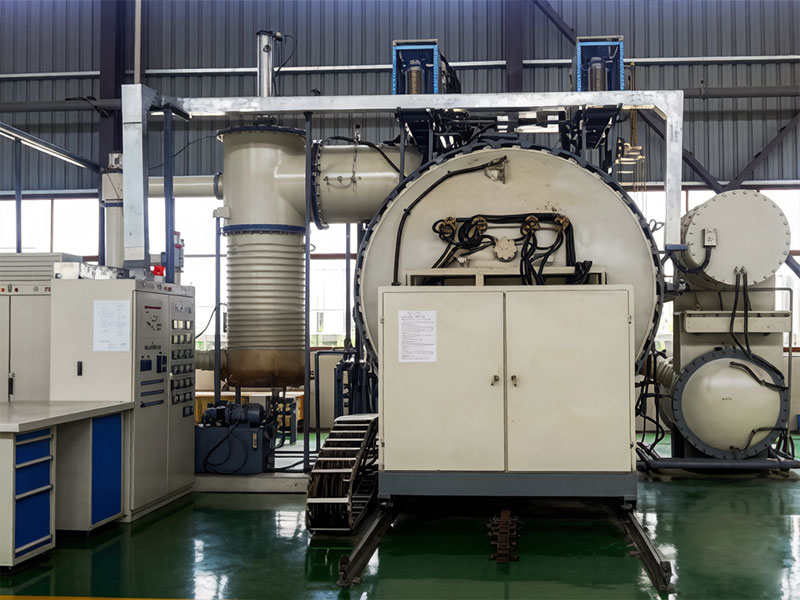
Vacuum annealing furnaces are mainly suitable for the continuous bright annealing, solution treatment, magnetization, and stainless steel quenching of various stainless steel products under a protective atmosphere. These products include water heating equipment components, water expansion fittings, sales items, medical devices, stainless steel nails, stainless steel screws, rivets, stainless steel bearings, watch cases, watch bands, cutting tools, micro-shafts, self-drilling screws, tableware, and more.
This versatile furnace is primarily used for continuous bright annealing, solution treatment, demagnetization, and stainless steel quenching of stainless steel products such as plumbing equipment, water expansion parts, sales items, medical instruments, stainless steel nails, stainless steel screws, rivets, stainless steel bearings, watch cases, watch bands, cutting tools, micro-shafts, self-drilling screws, and tableware—all under a controlled protective atmosphere. After treatment, the product surface remains smooth, without oxidation or decarburization. The furnace offers advantages such as high production efficiency, low energy consumption, minimal pollution, ease of operation, and reduced labor intensity. It can also be used for brazing and sintering of metal materials.
The vacuum annealing furnace uses halogen infrared lamps as the heat source to rapidly heat wafers or materials, eliminating certain internal defects and improving product performance.
The furnace features an advanced microcomputer control system and PID closed-loop temperature control, enabling high temperature control accuracy and uniformity. It can be equipped with a vacuum chamber and configured with various gases according to user process requirements.
Structural Characteristics:
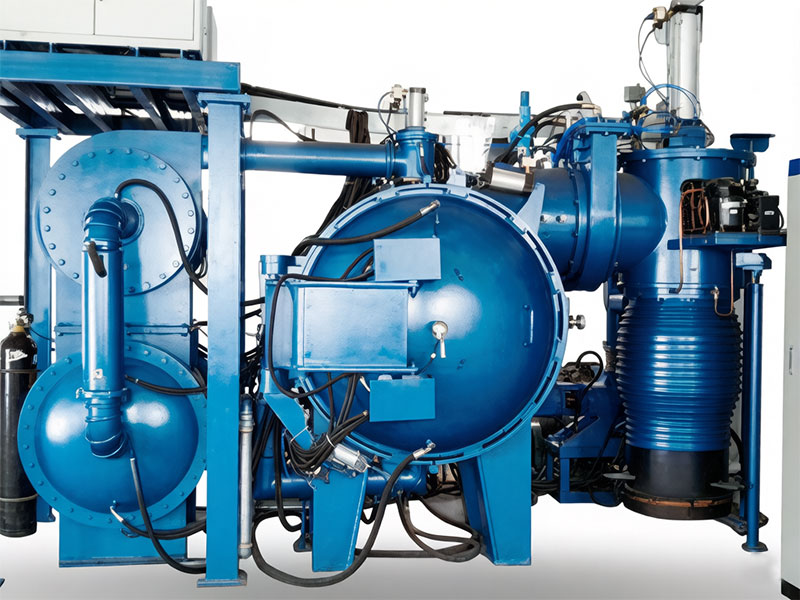
• The heating chamber is constructed with a stainless steel frame, and the thermal barrier consists of multiple layers of graphite felt, ensuring long service life and easy maintenance.
• Graphite tube heaters are used for convenient installation, low maintenance, and minimal failure rates.
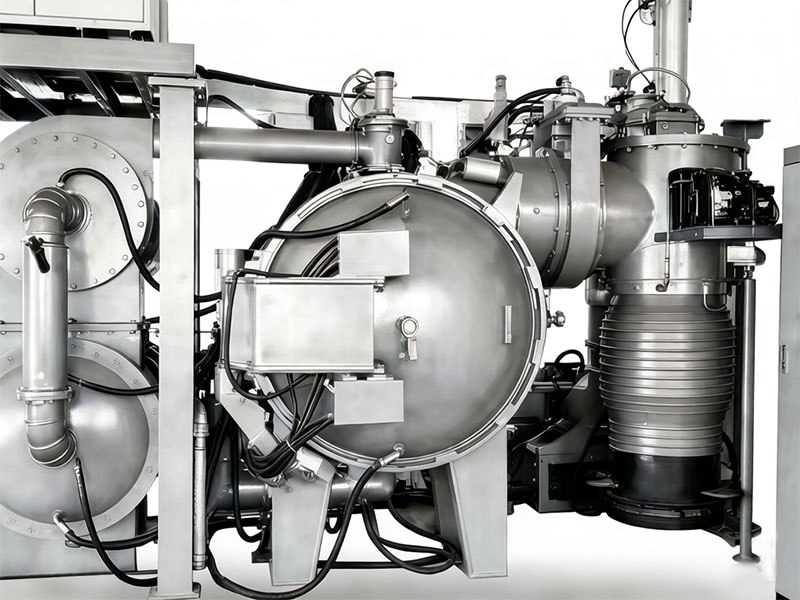
• The gas cooling system comprises a high-power, high-speed motor; a high-pressure, high-airflow impeller; a volute and guide plate; copper tube and fin heat exchangers; and a flow guide device. This system enables rapid and uniform cooling of workpieces through high-speed circulation: heat exchanger → fan → guide device → workpiece → heat exchanger.
• The heating chamber can also be designed with an all-metal structure.
• The electronic control system uses PLC and programmable temperature controllers to achieve three control modes: automatic, semi-automatic, and manual, ensuring flexible operation.
Applications:
Mainly used for vacuum heat treatment, vacuum brazing, and vacuum sintering of high-speed steel, cold and hot die steel, stainless steel, elastic alloys, high-temperature alloys, magnetic materials, and titanium alloys.