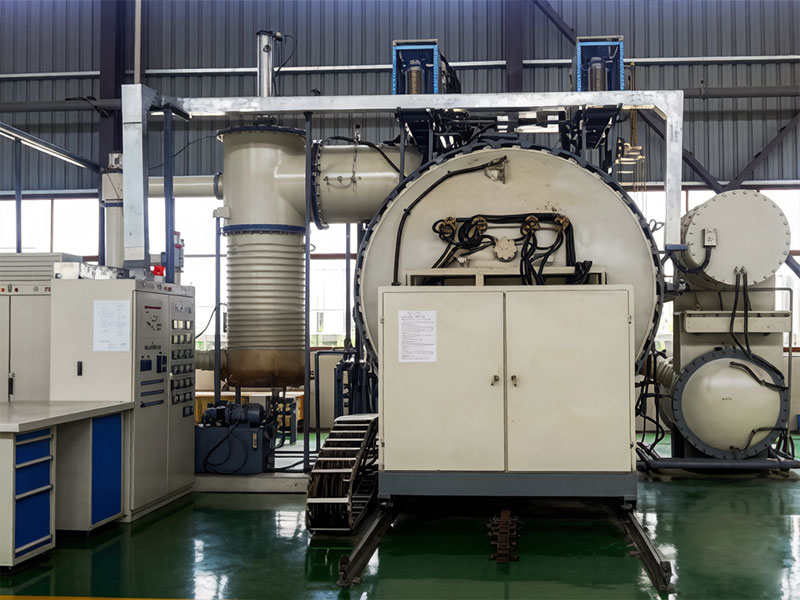
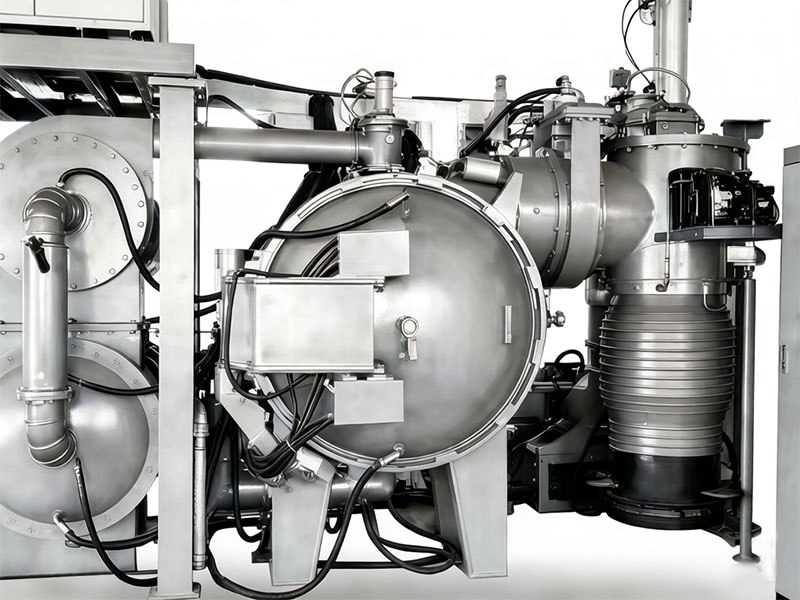
What are the functions and advantages of vacuum furnaces?
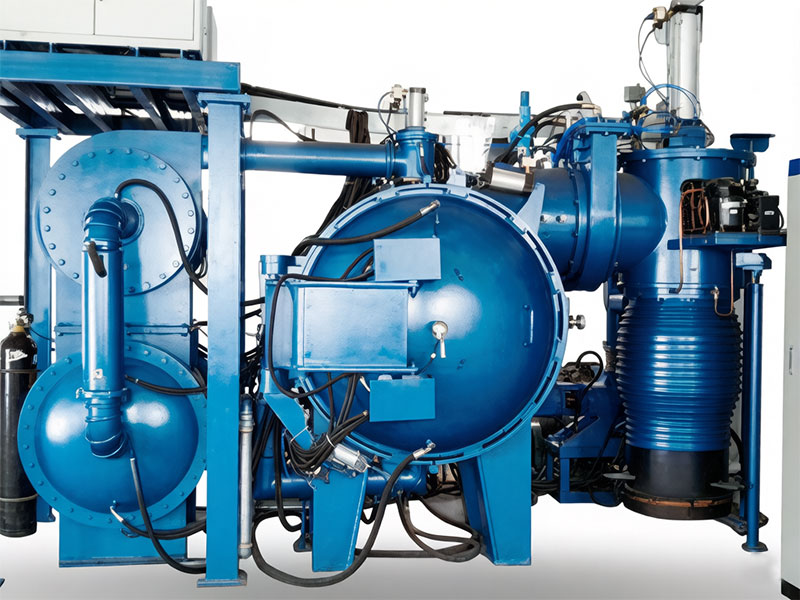
Heat Treatment: Enhancing the Performance, Reliability, and Lifespan of Mechanical Components
Heat treatment is a critical foundational process for improving the performance, reliability, and service life of mechanical parts. It enables the full exploitation of the potential of metallic materials, ensuring that components meet performance requirements and longevity under various operating conditions.
Advantages of Vacuum Heat Treatment:
• No oxidation, decarburization, or pollution.
• Smooth workpiece surfaces with minimal distortion.
• Superior comprehensive mechanical properties.
• Broad applicability across processes.
• High degree of automation.
• High production efficiency.
• Stable product quality.
• Energy-saving and environmentally friendly.
Vacuum heat treatment is widely used in applications such as annealing, tempering, oil/gas quenching, high-pressure (high-flow) gas quenching, vacuum carburizing, vacuum sintering, and vacuum brazing.
Process Features of Vacuum Heat Treatment:
1. Vacuum Degassing
During vacuum heating, the reduction of furnace pressure (i.e., increased vacuum level) allows residual gases (e.g., H₂, N₂, CO) in steel to escape (degas), improving the mechanical properties of steel parts. This enhances the plasticity and impact toughness of tool and die components after vacuum quenching, extending their service life.
2. Vacuum Degreasing
Widely applied in the precision degreasing of metal foils, wire-drawn products, micro-perforated meshes, and other small parts. Oils adhered to such parts—typically aliphatic compounds of carbon, hydrogen, and oxygen—have high vapor pressures. When heated in a vacuum, they decompose rapidly into water vapor, hydrogen, carbon dioxide, and other gases, which are then evaporated and removed by vacuum pumps. Note: Workpieces should still be cleaned before vacuum heat treatment to avoid contaminating the furnace or damaging vacuum pumps.
3. Vacuum Purification
During vacuum heating, surface oxides, minor rust, nitrides, hydrides, and other compounds on metals are reduced, decomposed, or evaporated, resulting in smooth, clean workpiece surfaces.
4. Vacuum Protection
When heated in an oxidizing atmosphere, most metals oxidize, losing their natural luster. Vacuum heating preserves the original surface brightness of metallic materials.